=== WordPress Importer === Contributors: wordpressdotorg Donate link: https://wordpressfoundation.org/donate/ Tags: importer, wordpress Requires at least: 5.2 Tested up to: 6.4.2 Requires PHP: 5.6 Stable tag: 0.8.2 License: GPLv2 or later License URI: https://www.gnu.org/licenses/gpl-2.0.html Import posts, pages, comments, custom fields, categories, tags and more from a WordPress export file. == Description == The WordPress Importer will import the following content from a WordPress export file: * Posts, pages and other custom post types * Comments and comment meta * Custom fields and post meta * Categories, tags and terms from custom taxonomies and term meta * Authors For further information and instructions please see the [documention on Importing Content](https://wordpress.org/support/article/importing-content/#wordpress). == Installation == The quickest method for installing the importer is: 1. Visit Tools -> Import in the WordPress dashboard 1. Click on the WordPress link in the list of importers 1. Click "Install Now" 1. Finally click "Activate Plugin & Run Importer" If you would prefer to do things manually then follow these instructions: 1. Upload the `wordpress-importer` folder to the `/wp-content/plugins/` directory 1. Activate the plugin through the 'Plugins' menu in WordPress 1. Go to the Tools -> Import screen, click on WordPress == Changelog == = 0.8.2 = * Update compatibility tested-up-to to WordPress 6.4.2. * Update doc URL references. * Adjust workflow triggers. = 0.8.1 = * Update compatibility tested-up-to to WordPress 6.2. * Update paths to build status badges. = 0.8 = * Update minimum WordPress requirement to 5.2. * Update minimum PHP requirement to 5.6. * Update compatibility tested-up-to to WordPress 6.1. * PHP 8.0, 8.1, and 8.2 compatibility fixes. * Fix a bug causing blank lines in content to be ignored when using the Regex Parser. * Fix a bug resulting in a PHP fatal error when IMPORT_DEBUG is enabled and a category creation error occurs. * Improved Unit testing & automated testing. = 0.7 = * Update minimum WordPress requirement to 3.7 and ensure compatibility with PHP 7.4. * Fix bug that caused not importing term meta. * Fix bug that caused slashes to be stripped from imported meta data. * Fix bug that prevented import of serialized meta data. * Fix file size check after download of remote files with HTTP compression enabled. * Improve accessibility of form fields by adding missing labels. * Improve imports for remote file URLs without name and/or extension. * Add support for `wp:base_blog_url` field to allow importing multiple files with WP-CLI. * Add support for term meta parsing when using the regular expressions or XML parser. * Developers: All PHP classes have been moved into their own files. * Developers: Allow to change `IMPORT_DEBUG` via `wp-config.php` and change default value to the value of `WP_DEBUG`. = 0.6.4 = * Improve PHP7 compatibility. * Fix bug that caused slashes to be stripped from imported comments. * Fix for various deprecation notices including `wp_get_http()` and `screen_icon()`. * Fix for importing export files with multiline term meta data. = 0.6.3 = * Add support for import term metadata. * Fix bug that caused slashes to be stripped from imported content. * Fix bug that caused characters to be stripped inside of CDATA in some cases. * Fix PHP notices. = 0.6.2 = * Add `wp_import_existing_post` filter, see [Trac ticket #33721](https://core.trac.wordpress.org/ticket/33721). = 0.6 = * Support for WXR 1.2 and multiple CDATA sections * Post aren't duplicates if their post_type's are different = 0.5.2 = * Double check that the uploaded export file exists before processing it. This prevents incorrect error messages when an export file is uploaded to a server with bad permissions and WordPress 3.3 or 3.3.1 is being used. = 0.5 = * Import comment meta (requires export from WordPress 3.2) * Minor bugfixes and enhancements = 0.4 = * Map comment user_id where possible * Import attachments from `wp:attachment_url` * Upload attachments to correct directory * Remap resized image URLs correctly = 0.3 = * Use an XML Parser if possible * Proper import support for nav menus * ... and much more, see [Trac ticket #15197](https://core.trac.wordpress.org/ticket/15197) = 0.1 = * Initial release == Frequently Asked Questions == = Help! I'm getting out of memory errors or a blank screen. = If your exported file is very large, the import script may run into your host's configured memory limit for PHP. A message like "Fatal error: Allowed memory size of 8388608 bytes exhausted" indicates that the script can't successfully import your XML file under the current PHP memory limit. If you have access to the php.ini file, you can manually increase the limit; if you do not (your WordPress installation is hosted on a shared server, for instance), you might have to break your exported XML file into several smaller pieces and run the import script one at a time. For those with shared hosting, the best alternative may be to consult hosting support to determine the safest approach for running the import. A host may be willing to temporarily lift the memory limit and/or run the process directly from their end. -- [Support Article: Importing Content](https://wordpress.org/support/article/importing-content/#before-importing) == Filters == The importer has a couple of filters to allow you to completely enable/block certain features: * `import_allow_create_users`: return false if you only want to allow mapping to existing users * `import_allow_fetch_attachments`: return false if you do not wish to allow importing and downloading of attachments * `import_attachment_size_limit`: return an integer value for the maximum file size in bytes to save (default is 0, which is unlimited) There are also a few actions available to hook into: * `import_start`: occurs after the export file has been uploaded and author import settings have been chosen * `import_end`: called after the last output from the importer Descubre las emocionantes reglas del Juego de la Carretera de Pollo en España - Congresso de Dança

Descubre las emocionantes reglas del Juego de la Carretera de Pollo en España

El Juego de la Carretera de Pollo es un juego de azar popular en casinos en línea y terrestres en España, donde los jugadores pueden enfrentarse en una carrera emocionante y desafiante. Sin embargo, a pesar de su popularidad, muchos jugadores no conocen las reglas y estrategias necesarias para jugar de manera efectiva. En este artículo, exploraremos las emocionantes reglas del Juego de la Carretera de Pollo y ofreceremos consejos prácticos para que los jugadores puedan disfrutar de esta experiencia de forma responsable y divertida.

¿Qué es el Juego de la Carretera de Pollo y cómo funciona?

El Juego de la Carretera de Pollo es un juego de azar en el que los jugadores compiten en una carrera para llegar a la meta antes que sus oponentes. El juego se juega con tarjetas o números, y el objetivo es llegar a la meta primero, ganando premios y recompensas a lo largo del camino. El juego puede ser jugado en línea o en persona, y hay diferentes variantes y reglas para cada versión.

Para jugar en línea, los jugadores pueden registrarse en una plataforma como Chicken Road Oficial, donde pueden crear un perfil y comenzar a jugar de inmediato.

Análisis de los riesgos en el Juego de la Carretera de Pollo

Aunque el Juego de la Carretera de Pollo puede ser un juego divertido y emocionante, también conlleva algunos riesgos importantes que los jugadores deben considerar. Algunos de estos riesgos incluyen:

Riesgo Descripción
Riesgos de adicción El Juego de la Carretera de Pollo puede ser un juego de azar adictivo, especialmente para aquellos que no tienen control sobre sus apuestas.
Pérdidas financieras El juego de azar puede llevar a pérdidas financieras significativas si no se juega responsablemente.

Conocer las reglas del Juego de la Carretera de Pollo para una experiencia óptima

Para disfrutar al máximo del Juego de la Carretera de Pollo, es importante conocer las reglas y estrategias necesarias para jugar de manera efectiva. Algunas de las reglas clave incluyen:

Objeto Descripción
Objetivo del juego El objetivo del Juego de la Carretera de Pollo es llegar a la meta antes que el adversario.
Tipos de apuestas Hay diferentes tipos de apuestas en el Juego de la Carretera de Pollo, incluyendo apuestas en el resultado del juego y apuestas en el número de vueltas que se necesitan para llegar a la meta.

Consejos para jugar de manera responsable en el Juego de la Carretera de Pollo

Para jugar de manera responsable y divertida, es importante seguir algunos consejos clave:

Consejo Descripción
Establecer un presupuesto Es importante establecer un presupuesto antes de jugar y no superarlo.
Jugar con calma Jugar con calma y no apurar las decisiones puede ayudar a evitar errores y pérdidas financieras.

Errores comunes al jugar el Juego de la Carretera de Pollo
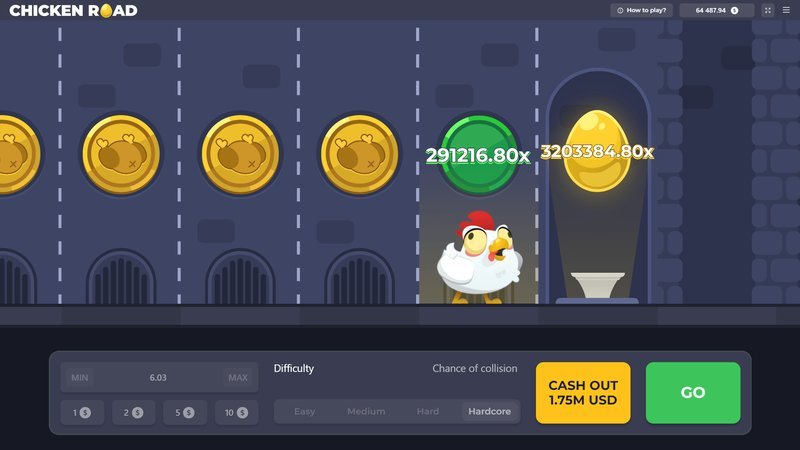
Jugar chicken road, chicken road game

Aunque el Juego de la Carretera de Pollo puede ser un juego divertido y emocionante, también conlleva algunos errores comunes que los jugadores deben evitar. Algunos de estos errores incluyen:

Error Descripción
No leer las reglas No leer las reglas del juego antes de jugar puede llevar a confusiones y pérdidas financieras.
No controlar las apuestas No controlar las apuestas puede llevar a pérdidas financieras significativas.

Comentários

Deixe um comentário

O seu endereço de e-mail não será publicado. Campos obrigatórios são marcados com *